

close
Choose Your Site
Global
Social Media
Views: 0 Author: Site Editor Publish Time: 2026-08-21 Origin: Site


Procuring capital equipment for conduit manufacturing carries incredibly high stakes. A single miscalculation during the planning phase can delay your product launch by months. The quality, compliance, and profitability of your final product rely entirely on how accurately you scope your requirements before purchasing. You cannot afford to make vague requests for "high-speed" or "standard" machines. Such ambiguity almost always results in severe equipment mismatches and wasted capital.
Instead, you must adopt a highly skeptical, evidence-based approach. Focus intensely on exact mechanical tolerances, specific raw material inputs, and strict end-use compliance rules. In this guide, we explore exactly what data you must prepare. You will learn how to frame your operational needs effectively to avoid underperforming production lines. We will also show you how to communicate facility constraints clearly, ensuring your final equipment arrives perfectly optimized for your specific factory floor.
Defining the exact end-use application (e.g., liquid-tight, industrial machine wiring) dictates the required locking mechanism and coating capabilities of the machine.
Production volume expectations must be balanced against maintenance downtime and changeover speeds, not just maximum theoretical output.
A reliable flexible conduit machine supplier requires specific raw material parameters (strip thickness, tensile strength, polymer types) to engineer the correct tooling.
Facility constraints, including power stability and footprint, are critical early-stage disclosures.
Factory Acceptance Testing (FAT) parameters should be established in the initial Request for Quote (RFQ).
Omitting specific parameters in a Request for Quote (RFQ) creates immediate operational risks. Business problem framing starts by understanding how vague descriptions hurt your bottom line. You might receive machines featuring under-spec'd motors incapable of handling heavy steel strips. Incompatible tooling can bottleneck your entire floor. Even worse, the equipment might fail to meet stringent regulatory standards required by your buyers. A vague brief leaves too much room for interpretation.
A successful supplier briefing aligns your capital expenditure directly to verifiable production metrics. You need to target specific numbers. Focus on minimum yield percentages, acceptable defect rates, and realistic operational uptime. Do not ask for a "fast machine." Instead, demand a line capable of producing forty meters per minute continuously. Your success criteria must be measurable on the factory floor from day one. Partnering closely with a flexible conduit machine supplier helps clarify these exact technical boundaries.
However, you must actively watch out for the "over-specification" trap. Buyers often demand unnecessary tolerances. This inflates machine costs drastically without adding commercial value to the final conduit. If your market requires standard commercial-grade flexibility, do not demand aerospace-level micron precision. Over-engineering leads to complex maintenance schedules. It also increases the cost of consumable wear parts. Find the practical balance. Communicate your core commercial needs clearly.
You must build your machine to satisfy the final installation environments. Will the conduit wire CNC machines exposed to harsh cutting fluids? Will electrical contractors use it for outdoor direct-burial projects? These exact end-use cases dictate your required machine specifications. You must translate field applications into hard mechanical requirements.
Regulatory frameworks demand precise manufacturing capabilities. If you produce Liquid-Tight Flexible Metal Conduit (LFMC), your extrusion line must perform flawlessly. It must bond the PVC or PU jacket tightly enough to pass strict UL and NEC compliance tests. Poor adhesion causes catastrophic field failures. The machine must maintain consistent polymer temperatures to ensure a uniform jacket thickness.
Consider mechanical stress and standard NEC support spacing rules. Conduit operating in heavy industrial settings faces constant abuse. National Electrical Code guidelines mandate extreme durability and rigid support intervals. Therefore, you need machines capable of forming high-tension interlock or square-lock profiles. These profiles actively resist uncoiling under heavy tension. If the machine cannot hold tight tolerances during the locking phase, the conduit will fail basic pull tests.
Always provide your supplier exact testing standards. Name the specific codes the finished product must pass. Common examples include UL 360 for liquid-tight variants or IEC 61386 for international markets. This actionable output guarantees your equipment arrives ready for compliance testing. Do not assume the builder knows your local regulatory landscape.
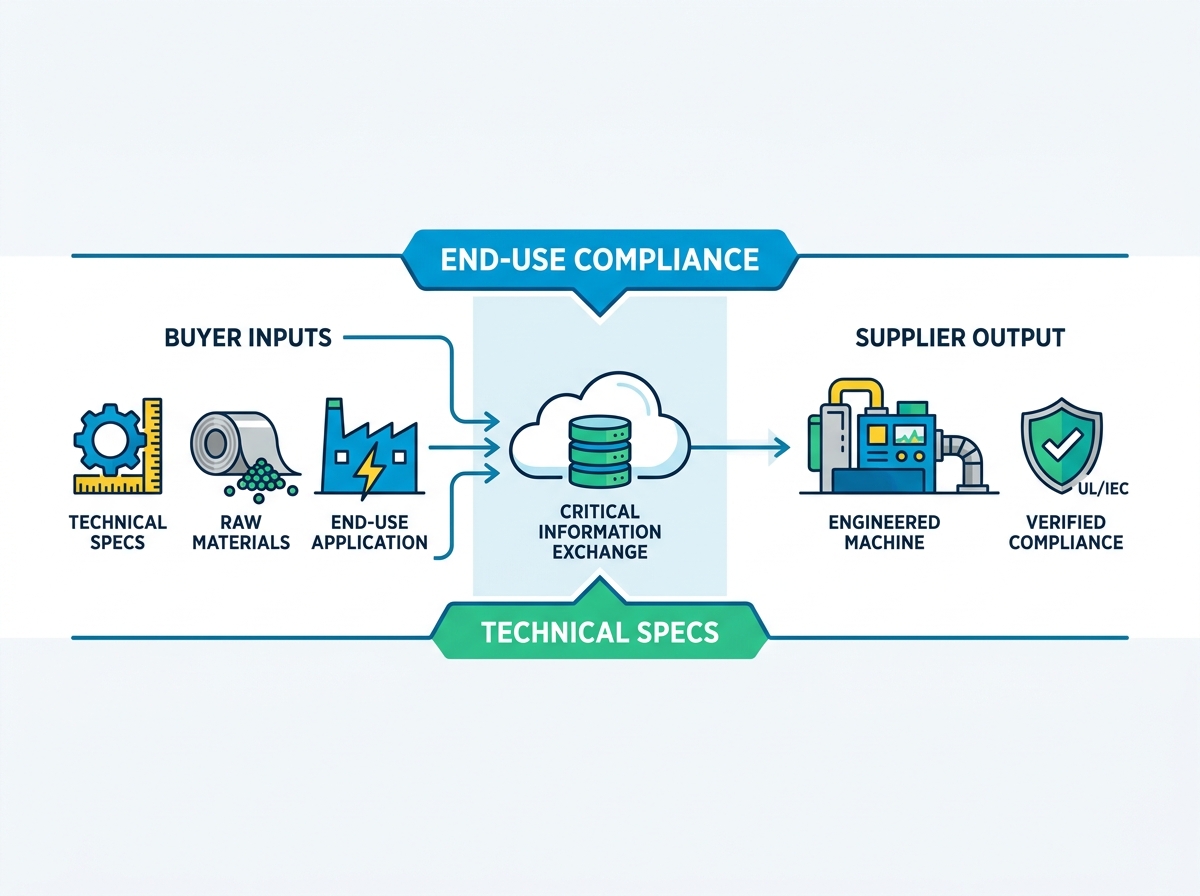
Establishing core technical parameters prevents devastating operational delays. You must define your exact diameter ranges clearly. Accept realistic changeover times to understand true factory throughput. Specifying broad ranges without planning for downtime ruins production schedules.
Specify the exact inner diameter (ID) and outer diameter (OD) ranges you require. State clearly if you need to run sizes from 3/8" up to 2". Then, ask for realistic tooling changeover times between these specific sizes. If changing from 1/2" to 1" takes four hours, you cannot run both sizes profitably in a single shift. This data helps you calculate true operational efficiency.
Next, outline your profile and lock types. Clearly state whether you require square-lock profiles for general-purpose wiring. If your buyers demand high crush resistance, specify interlock profiles instead. Each lock type requires distinctly different forming rollers.
Finally, define throughput metrics in highly realistic terms. Avoid using theoretical "burst" speeds. Ask your flexible conduit machine supplier to quote meters per minute at continuous operation. You must factor in normal operator handling, raw material loading, and periodic quality checks.
Conduit Profile and Application Chart
Profile Type | Primary Application | Crush Resistance Level | Machine Tooling Complexity |
|---|---|---|---|
Square-Lock | General commercial wiring, OEM equipment | Moderate | Standard / Moderate |
Interlock | Heavy industrial, high-stress environments | High | Advanced / High |
Double-Interlock | Specialty armor, high tensile requirements | Maximum | Highly Specialized |
Your machine cannot function properly if it encounters unexpected raw materials. Provide the exact metal strip specifications you plan to use daily. Will you run galvanized steel, stainless steel, or aluminum? You must include specific strip thickness, strip width, and ultimate tensile strength. This raw data dictates the machine's required motor torque. It also determines the necessary forming roller hardness.
If you supply tough stainless steel without warning the builder, standard rollers will wear out prematurely. Conversely, aluminum requires gentler handling to prevent unwanted stretching. Always share your material certificates during the design phase.
If you manufacture liquid-tight products, detail your jacket and coating materials extensively. Different polymers behave differently during the extrusion process. Specify whether you use PVC, Polyurethane, or Low Smoke Zero Halogen (LSZH) compounds.
PVC: Requires standard screw designs and standard cooling lengths.
Polyurethane: Demands tighter temperature controls to prevent material degradation.
LSZH: Often requires highly specialized screws to prevent premature curing inside the barrel.
Different polymers require unique screw designs inside the extruder. They also demand specific heating zone configurations. Furthermore, your choice of polymer dictates the cooling trough lengths needed in the line setup. Inform your supplier early to ensure optimal thermal integration.
Do not wait until delivery day to measure your floor space. Disclose your physical footprint and layout constraints immediately. Share available floor space dimensions using updated facility CAD drawings. Specify your required directional material flow. Let the builder know if the line runs left-to-right or right-to-left. Also, provide exact ceiling heights. Overhead clearance matters greatly for accumulators and large pay-off systems.
Power and utility availability dictates crucial electrical design choices. State your exact factory voltage, phase, and frequency. Industrial environments often suffer from voltage drops. Notify the builder if your grid requires specialized transformers.
Confirm the availability of chilled water systems. High-speed extrusion cooling requires significant water management. You must ensure your facility provides adequate flow rates and thermal capacity for the cooling troughs.
Finally, be transparent about your operator skill level. You need to assess the technical proficiency of your staff honestly. This determines if advanced PLC automation suits your team. It helps decide if you need integrated remote diagnostics. Sometimes, manual mechanical controls prove most appropriate for less experienced floor operators. Over-complicating the control panel leads to higher scrap rates.
Once you receive a proposal, you must evaluate the claims critically. Look for guaranteed production speeds backed by verifiable case studies. Demand real-world testing data rather than theoretical maximums. Ask to see videos of identical machines running similar profiles.
Assess their supply chain for consumable tooling. You will routinely replace rollers, cutting blades, and sizing dies. Standardized, non-proprietary wear parts offer much better long-term security. They prevent you from becoming locked into expensive proprietary replacements. Ask for a spare parts price list during the negotiation phase.
Pay close attention to post-sales support and testing agreements. Ensure the supplier agrees to a rigorous Factory Acceptance Test (FAT). They must use your specific raw materials before authorizing shipment. A standard FAT should include a continuous multi-hour run.
Verify dimensional tolerances continuously during the FAT run.
Test emergency stop functions and interlock safety features.
Perform an actual tooling changeover to time the process.
Confirm their commissioning process. Review their on-site training protocols for your operators. Also, check their software update policies for PLC systems. Partnering with the right flexible conduit machine supplier ensures a smooth transition from final installation to full-scale profitability.
Treating your equipment provider as an engineering partner yields the highest return on investment. They are not merely a transactional vendor selling metal. Building a high-performance conduit line requires deep, ongoing collaboration. Total transparency regarding raw materials is absolutely essential. You must openly share your end-use compliance targets. Clearly outline NEC standards or UL requirements your product must hit.
Do not hide your facility constraints or operator skill gaps. This transparency is the only proven way to mitigate implementation risk. It ensures immediate profitability right after installation. Document every technical requirement meticulously. Communicate your operational realities honestly. This proactive approach guarantees your manufacturing line will run efficiently for decades. Precise planning upfront eliminates costly retrofits and unexpected downtime later.
A: Standard lead times typically range from 3 to 6 months. This depends heavily on your required level of customization. Engineering, precision assembly, and rigorous testing take time. Complex extrusion lines or specialized interlocking mechanisms generally push delivery toward the six-month mark. We advise planning your facility layout while the machine undergoes assembly.
A: Technically possible, but highly impractical for volume production. Switching between square-lock and interlock requires extensive tooling changes. It involves significant mechanical limitations and extended operator downtime. We generally recommend purchasing dedicated machines for high-volume runs to maximize your daily operational efficiency and reduce setup errors.
A: Compliance relies on a combination of machine precision, correct raw materials, and strict quality control. The machine provides the physical forming and jacket bonding. However, your supplier must guarantee specific dimensional tolerances. You must run standardized pull and crush tests during the Factory Acceptance Test to verify compliance before shipping.
A: Suppliers can recommend optimal strip dimensions and polymer types for their equipment. However, you must lock in your local material supply first. Once you secure a regional steel vendor, you provide those exact material specs back to the machine builder. They use this exact data for final roller calibration.


