

close
Choose Your Site
Global
Social Media
Views: 151 Author: Site Editor Publish Time: 2026-07-27 Origin: Site


Industrial environments relentlessly attack exposed electrical wiring systems. Specifying the wrong jacket for flexible metal conduit (FMC) causes premature material degradation, rapid liquid ingress, and eventual electrical failures. These predictable failures trigger dangerous short circuits and highly costly facility downtime. Moving from standard bare FMC to Liquid-tight Flexible Metal Conduit (LFMC) requires rigorous material matching. You must align the outer jacket’s chemical and physical properties directly to your specific operational environment. Key evaluation factors include static versus dynamic flexing, aggressive chemical exposure, and strict fire safety regulations.
This article provides a transparent, engineering-focused breakdown of Polyvinyl Chloride (PVC), Polyethylene (PE), and Thermoplastic Polyurethane (TPU) jackets. We will help you navigate these polymer options objectively. You will learn how to align procurement choices closely to exact project requirements and critical international compliance standards.
PVC is the cost-effective, baseline standard for general commercial and industrial use, offering excellent water and weather resistance but limited durability in extreme cold or continuous dynamic motion.
PE prioritizes safety and compliance in enclosed spaces; it is a Low Smoke Zero Halogen (LSZH) material, crucial for transit, rail, and confined data centers.
TPU is the premium choice for harsh environments, delivering unmatched abrasion resistance, oil tolerance, and extreme-temperature flexibility for robotics and continuous-flex applications.
Selecting the right flexible metal conduit coating demands a lifecycle-cost analysis rather than just comparing upfront unit prices.
Engineers often view the outer jacket merely as a waterproof barrier. However, a properly specified flexible metal conduit coating does much more than keep moisture out of the internal steel or aluminum core. The polymer layer acts as a critical line of defense against multiple environmental threats. It mitigates physical abrasion, resists UV and ozone degradation, blocks chemical and oil ingress, and absorbs harsh mechanical stress during movement.
To evaluate these coatings properly, we must first differentiate between static and dynamic applications. Conduits fixed permanently in place across building infrastructure face entirely different stresses compared to those in constant motion. Automation arms, robotics, and CNC drag chains subject conduits to continuous flexing. This dynamic movement represents the primary fault line for material failure. A jacket material excelling in a static ceiling plenum will often crack within weeks if placed on a moving robotic axis.
Furthermore, the outer coating establishes the compliance baseline for the entire electrical routing system. Regulatory standards evaluate the combined performance of the metal core, the polymer jacket, and the terminating fittings. Certifications like UL 360 or CE marking depend heavily on jacket integrity. Similarly, achieving specific Ingress Protection (IP) ratings—such as IP67 for temporary submersion, IP68 for continuous submersion, or IP69K for high-pressure, high-temperature washdowns—relies entirely on how well the coating compresses against sealing glands without deforming over time.
Polyvinyl Chloride (PVC) remains the most widely deployed material in the conduit industry. Manufacturers favor it because it provides a general-purpose, highly moldable, and cost-efficient barrier. PVC compounds easily accept various plasticizers, allowing producers to adjust flexibility and UV resistance based on basic commercial needs.
The material offers several distinct strengths for standard installations:
Reliable Ingress Protection: PVC effectively blocks water, general moisture, and non-corrosive ambient dust.
Solid UV Resistance: Standard outdoor applications benefit from PVC's ability to withstand prolonged sunlight without rapid degradation, provided the manufacturer includes adequate UV stabilizers.
Maximum Compatibility: Installers benefit from the broadest range of compatible, off-the-shelf commercial fittings designed specifically for the standard hardness of PVC jackets.
Despite its popularity, PVC carries inherent limitations and risks. Installers must carefully avoid deploying it in environments outside its chemical and thermal boundaries. The material becomes highly brittle in sub-zero temperatures, creating a severe cold-shatter risk if impacted or bent during freezing conditions. Furthermore, PVC degrades, hardens, or swells when exposed to aggressive industrial solvents, modern cutting fluids, or heavy machine oils. Lastly, standard PVC releases highly toxic, corrosive halogen gas when burned. This chemical reality makes it entirely unsuitable for modern strict enclosed-space fire codes.
We typically see PVC thriving in baseline applications. Ideal use cases include standard HVAC wiring, everyday commercial construction, above-ground wastewater facilities, and general machine tool wiring where chemical exposure remains minimal.
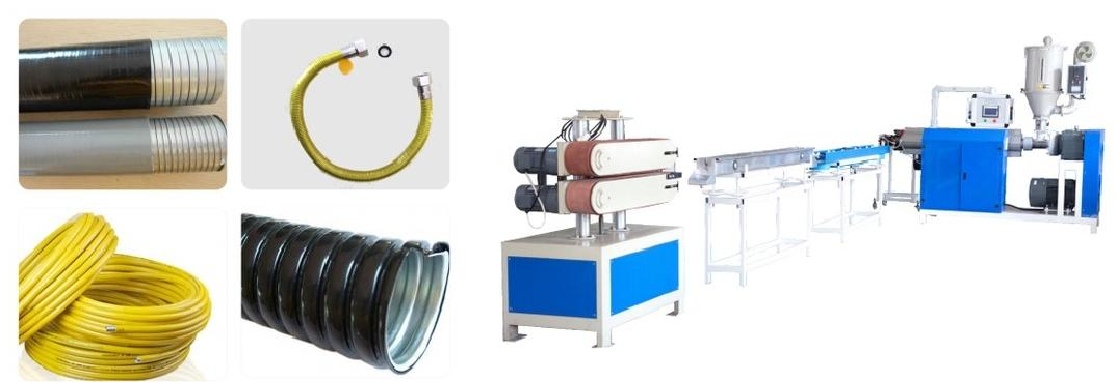
Polyethylene (PE) coatings shift the focus from general utility to strict environmental and personnel safety. Material scientists formulate PE jackets primarily to mitigate catastrophic risks during fire events. Unlike PVC, which relies on halogens like chlorine, PE possesses a much cleaner molecular structure. When subjected to extreme heat or open flames, it does not release obscuring dark smoke or toxic acid gases.
The strengths of PE center almost entirely on safety and thermal stability. It easily achieves Low Smoke Zero Halogen (LSZH / LSFOH) compliance, a non-negotiable requirement for many modern infrastructure projects. Additionally, PE exhibits excellent baseline temperature stability compared to standard PVC. It also offers superior resistance to water penetration and withstands specific corrosive environments better than traditional commercial plastics.
However, users must account for PE's specific mechanical limitations. The material generally feels stiffer than both PVC and TPU. This stiffness requires electrical contractors to plan for larger bend radii during installation, demanding more physical space inside routing channels. PE also provides lower mechanical abrasion resistance compared to premium elastomers, meaning it can wear down faster if dragged continuously across rough concrete or metal edges.
Because of its life-saving fire properties, you should mandate PE coatings for the following critical environments:
Mass transit vehicles: Trains, subways, and buses where passengers cannot easily evacuate.
Underground railway stations: Confined subterranean spaces where smoke visibility dictates survival rates.
Marine and offshore platforms: Ships and oil rigs requiring strict hazard containment.
Hospitals and critical data centers: Facilities housing vulnerable populations or sensitive electronics vulnerable to acid gas corrosion.
Thermoplastic Polyurethane (TPU) serves as the premium, high-performance tier of conduit coatings. It functions as an advanced elastomer, effectively bridging the performance gap between traditional rubber and rigid plastic. TPU delivers a unique combination of extreme durability and high elasticity, making it the definitive choice for the world's most demanding industrial environments.
The performance metrics of TPU significantly outpace standard commercial plastics:
Exceptional Mechanical Strength: It provides superior abrasion, tear, and puncture resistance. You can drag TPU across jagged factory floors without exposing the underlying steel core.
High Flex-Fatigue Life: The material absorbs millions of continuous bending cycles without micro-cracking, maintaining structural integrity on fast-moving automated axes.
Outstanding Chemical Resistance: TPU naturally repels aggressive industrial oils, heavy greases, and harsh synthetic machining coolants.
Extreme Temperature Resilience: It retains full flexibility in severe low temperatures, often functioning flawlessly down to -40°C or lower without shattering.
The primary limitation of TPU remains its commercial impact. It carries the highest upfront cost per foot among standard jacket materials. Over-specifying TPU for basic commercial buildings drives up project budgets unnecessarily without delivering tangible operational benefits. It proves completely overkill for static, indoor applications where standard PVC would easily last decades.
You should reserve TPU for environments that actively destroy lesser materials. Ideal use cases encompass multi-axis robotics, high-speed CNC machining centers, automated guided vehicles (AGVs), continuous-rotation wind turbines, and heavy-duty mining equipment.
Selecting the optimal material requires a structured evaluation framework. You must balance immediate capital expenditure against long-term operational reliability. We recommend filtering your choices through four specific criteria to ensure precise specification.
First, evaluate Budget versus Lifecycle demands. PVC always wins on initial procurement cost. However, TPU easily wins on reducing maintenance downtime in harsh settings. A cheap jacket that fails in three months on a robotic arm costs significantly more in production losses than specifying TPU on day one. Next, assess your flexibility needs. PVC offers good flexibility, PE ranks as fair due to its stiffness, while TPU delivers excellent dynamic elasticity.
Third, rigorously assess environmental hazards. Identify your primary site threats, including UV exposure, oil saturation, solvent washdowns, or fire risks. You should intuitively match PE to fire risk zones, TPU to oil and abrasion-heavy automation, and PVC to general weather and moisture defense. Finally, consider standardization and vendor lock-in. Always check if your preferred fittings manufacturer supports IP ratings across all three jacket types. Some budget glands only compress properly against PVC, leaving dangerous gaps when used with stiffer PE jackets.
Material Characteristic | PVC (Polyvinyl Chloride) | PE (Polyethylene) | TPU (Thermoplastic Polyurethane) |
|---|---|---|---|
Primary Strength | Cost-efficiency & moldability | Zero halogen & low smoke | Extreme abrasion & flex life |
Dynamic Flexing | Low to Moderate | Low (Stiffest) | Highest (Millions of cycles) |
Chemical & Oil Resistance | Poor to Fair | Good | Excellent |
Fire Safety Compliance | Emits toxic halogen gas | LSZH / LSFOH Compliant | Varies (Usually halogen-free but check specs) |
Extreme Cold Tolerance | Brittle (Cold-shatter risk) | Moderate to Good | Excellent (Down to -40°C) |
Even the most accurately specified jacket material will fail if integrated poorly. Field installation introduces several critical implementation risks that compromise system integrity. The most common error involves mismatched fittings. You must never use standard rigid conduit fittings on LFMC. Ensure your buyers and installers know that achieving verified IP68 or IP69K ratings requires specific, system-tested glands and connectors. The sealing mechanism must match the exact hardness and compression profile of the chosen jacket.
Installation temperature limits represent another massive blind spot for contractors. Highlighting the risk of installing PVC in freezing conditions cannot be overstated. When crews unspool and bend cold PVC conduit during winter construction, the jacket frequently micro-cracks. These invisible cracks later expand, allowing water directly into the electrical system. By contrast, TPU allows for safe, rapid installation regardless of severe cold.
Finally, avoid regulatory blindspots during the procurement phase. Swapping PVC for TPU or PE mid-project may inadvertently change the UL or CSA listing of the final assembly. Regulatory bodies certify the specific combination of conduit core and polymer jacket. You must always verify the specific jacket-conduit combination certification before issuing purchase orders. If you need clarification on how different compounds impact your project's certification status, we highly recommend you contact us to review technical data sheets.
Specifying LFMC requires balancing environmental threats against budget realities. Your final verdict logic should remain straightforward: do not over-specify TPU if PVC will comfortably survive the environment, but never compromise on PE where LSZH safety codes mandate it. Understanding the chemical and mechanical boundaries of each polymer ensures you protect critical electrical systems without wasting capital.
As a next step, we strongly recommend conducting a thorough environmental audit of your entire cable routing path. Document extreme temperatures, potential fluid exposures, moving axes, and local fire regulations before selecting a material.
Prompt your engineering team to request physical material sample kits for internal evaluation. Review compliance specification sheets against your facility's hazard profile. Matching the right polymer technology to your specific application prevents unplanned downtime and guarantees long-term operational safety.
A: It depends heavily on the specific manufacturer's rating. While PVC offers excellent moisture resistance, standard commercial PVC LFMC is rarely rated for direct earth burial. Soil chemistry, ground shifting, and prolonged moisture can degrade the jacket. You must source LFMC specifically carrying a "Direct Burial" UL certification, which features a thicker, specially stabilized PVC formulation.
A: Standard plastics like PVC contain halogens (chlorine). When ignited, they emit thick black smoke and highly toxic hydrogen chloride gas, which turns into hydrochloric acid upon contact with moisture in human lungs or electronics. PE lacks these halogens entirely. It burns significantly cleaner, emitting very light smoke and zero toxic acid gases.
A: Yes, provided the application requires it. TPU justifies its high initial cost through dramatically improved Mean Time Between Failures (MTBF) in dynamic environments. In robotic applications or areas exposed to harsh cutting oils, PVC degrades and fails quickly, causing expensive machine downtime. TPU survives these conditions indefinitely, making its long-term cost drastically lower.
A: While the outer diameter (OD) of the conduits remains standardized, you must verify the fitting's compatibility. The internal sealing gland mechanism compresses differently depending on the material's hardness. Stiffer PE or highly elastic TPU may require specifically rated sealing rings to successfully achieve high-pressure IP68 or IP69K ratings compared to softer PVC.


