

close
Choose Your Site
Global
Social Media
Views: 24 Author: Site Editor Publish Time: 2025-12-12 Origin: Site


Efficient irrigation is crucial for modern agriculture, landscaping, and greenhouse management. With the global need for sustainable water usage, traditional manual watering or basic sprinklers are often insufficient to meet the precision and efficiency required. In this context, a sprinkler hose machine has become an essential tool for producing high-quality sprinkler hoses that deliver uniform water distribution while optimizing labor, water, and energy usage.
Understanding the working principle of a sprinkler hose machine is key for manufacturers, farmers, and irrigation professionals who aim to maximize production efficiency and hose quality. By analyzing the components, step-by-step processes, critical parameters, and technological innovations, stakeholders can ensure reliable operation, reduce waste, and customize hoses to meet diverse irrigation needs. This article explores the complete working principle of a sprinkler hose machine, from raw material feeding to finished hose collection, emphasizing operational mechanics and practical advantages.
A sprinkler hose machine consists of several interconnected units that work together to produce precise, durable, and flexible hoses. Understanding each component and its function is essential for comprehending the overall working principle.
The extruder unit is the core of the machine. It melts the raw plastic material—commonly polyethylene (PE), polyvinyl chloride (PVC), or ethylene-vinyl acetate (EVA)—and pushes it through a die to form the hose’s basic shape. Key aspects include:
Temperature control: Ensures uniform melting of plastic without degradation.
Screw rotation and pressure: Governs material flow and prevents voids or inconsistencies.
Feed hopper: Supplies raw pellets or granules to the extruder.
Precision in the extruder unit is vital to achieving uniform hose diameter and wall thickness, which directly impacts irrigation efficiency and hose durability.
After extrusion, the hose passes through the forming unit, which shapes it to the desired diameter, thickness, and flexibility. The forming unit often includes:
Mandrels or shaping tubes: Provide structural support for the hose during formation.
Tension rollers: Control hose alignment and prevent stretching or deformation.
Proper hose formation ensures consistent water flow and prevents weak points that could compromise performance under pressure.
Sprinkler hoses require precise holes or slots to deliver water uniformly along their length. The perforation unit achieves this through:
Mechanical drilling: Using rotating or reciprocating tools to punch holes.
Laser drilling: Offers higher precision for adjustable hole sizes and spacing.
Adjustable patterns: Enables customization for different irrigation needs, such as low-pressure garden watering or high-pressure agricultural irrigation.
Accurate perforation is critical for maintaining consistent water distribution and preventing over- or under-watering.
Once the hose is formed and perforated, it passes through a cooling system that solidifies the plastic and preserves its shape. Cooling methods include:
Water bath cooling: Rapidly solidifies the hose using controlled water flow.
Air cooling: Uses fans or ambient air for gentle solidification.
Hybrid systems: Combine water and air for faster yet uniform cooling.
The cooling system prevents hose deformation, maintains wall thickness, and ensures flexibility for handling and installation.
The winding unit collects the finished hoses for storage, transport, or immediate use. Key features include:
Tension control: Prevents stretching or kinking during winding.
Automatic or semi-automatic operation: Enhances efficiency for high-volume production.
Adjustable speed: Ensures synchronization with the extrusion and perforation units.
Proper winding maintains hose integrity and reduces the risk of damage during handling.
Modern sprinkler hose machines feature integrated control systems, often PLC-based or IoT-enabled, that manage temperature, speed, pressure, and perforation parameters. Benefits include:
Real-time monitoring for quality assurance.
Automated adjustments to maintain consistent hose diameter and hole patterns.
Data logging for performance optimization and predictive maintenance.
Understanding the step-by-step operation of a sprinkler hose machine clarifies how raw materials are transformed into finished hoses suitable for various irrigation applications.
The process begins with feeding plastic pellets or granules into the machine’s hopper. Proper material selection and preparation are essential:
Material types: PE, PVC, or EVA depending on hose flexibility, durability, and environmental conditions.
Additives: UV stabilizers or colorants may be added for outdoor use.
Feeding rate: Controlled to maintain consistent extrusion pressure and hose uniformity.
The raw plastic is melted in the extruder and forced through a die to form the hose tube. Key aspects include:
Temperature regulation: Ensures uniform melting and prevents burning.
Screw rotation speed: Controls extrusion rate, influencing wall thickness.
Die design: Determines hose diameter and initial flexibility.
After extrusion, the hose enters the forming unit to acquire precise shape and wall thickness. Tension rollers maintain alignment and prevent distortion.
Perforation is a critical step that transforms the hose into a functional sprinkler. Methods include:
Mechanical punching: Uses rotating or reciprocating drills to create evenly spaced holes.
Laser perforation: Provides higher precision, adjustable hole diameter, and complex patterns.
Pattern customization: Enables hoses tailored for specific irrigation needs, such as slow drip irrigation or high-volume spray.
Accurate perforation ensures uniform water distribution and efficient irrigation performance.
Immediately after shaping and perforation, the hose enters the cooling stage:
Water bath: Rapidly solidifies the hose while maintaining wall integrity.
Air cooling: Prevents deformation and allows gentle drying.
Temperature control: Ensures hoses retain flexibility without compromising durability.
Cooling also prevents internal stresses that could cause hose failure under pressure.
Finally, the hoses are cut to desired lengths and wound onto spools or reels:
Automatic cutting: Ensures uniform lengths for packaging or installation.
Tension-controlled winding: Maintains hose integrity, avoiding stretching or kinking.
Storage readiness: Finished hoses are now ready for shipment or direct deployment in irrigation systems.
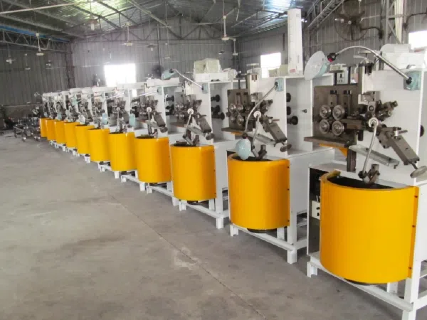
Several factors influence the performance and efficiency of a sprinkler hose machine:
Extrusion temperature and pressure: Affect hose wall consistency.
Die precision: Determines accurate diameter and wall thickness.
Perforation accuracy: Ensures uniform water delivery.
Cooling speed and uniformity: Prevents deformation and maintains flexibility.
Line speed and winding tension: Balances production rate with product quality.
Maintaining these parameters is essential for producing high-quality hoses that meet industry standards and application requirements.
Modern sprinkler hose machines incorporate several technological advancements to enhance performance:
Automated control and PLC systems: Monitor temperature, extrusion rate, and perforation patterns.
IoT-enabled sensors: Provide real-time feedback and predictive maintenance.
Energy-efficient extrusion systems: Reduce electricity consumption while maintaining output.
Adjustable perforation modules: Allow quick customization for diverse irrigation applications.
Hybrid cooling systems: Optimize solidification for both speed and uniformity.
These innovations increase machine reliability, reduce waste, and improve the overall quality of sprinkler hoses.
Feature | Small-Scale Machine | Industrial High-Capacity Machine | Advanced Smart Machine |
Extrusion Capacity | Low | High | High with automation |
Perforation Type | Manual/Mechanical | Mechanical/Automatic | Laser/Precision adjustable |
Cooling Method | Air or simple water bath | Water bath/air hybrid | Optimized cooling with sensors |
Control System | Basic temperature knobs | PLC-based automation | IoT-enabled real-time control |
Production Speed | Moderate | High | Adjustable with precision |
Hose Customization | Limited | Moderate | High |
Optimized production: Operators can adjust parameters for maximum efficiency.
Consistent hose quality: Uniform diameter and perforation reduce irrigation problems.
Reduced waste: Proper operation minimizes material loss.
Customizable hoses: Knowledge of mechanics allows tailored designs for specific crops or garden layouts.
Sustainability: Efficient machines reduce energy consumption and water usage.
The working principle of a sprinkler hose machine relies on the seamless coordination of extrusion, forming, perforation, cooling, and winding units. Each stage—from raw material feeding and shaping to perforation, cooling, and collection—is critical for producing high-quality hoses that deliver uniform water distribution, durability, and flexibility. By understanding these processes, manufacturers and irrigation professionals can optimize performance, reduce waste, and customize hoses for various agricultural, greenhouse, and landscaping applications. Modern innovations such as automated control systems, IoT monitoring, and adjustable perforation modules further enhance efficiency and reliability. For those seeking advanced, reliable, and customizable sprinkler hose machines, exploring offerings from experienced manufacturers like Yuyao AT Machinery Co., Ltd. provides access to professional guidance, high-quality machinery, and global support—ensuring optimal irrigation performance and long-term sustainability for diverse agricultural projects.


